

If you’ve ever found yourself asking, “Why is my stock always wrong?”, you’re certainly not alone.
It’s one of the most common frustrations we hear from owners and operations managers of wholesale, distribution and light manufacturing businesses.
Not because they’re running a poor business, but because as businesses grow, inventory becomes harder to control. More products, more warehouse movements, more staff and more customer orders create more opportunities for small discrepancies to creep in.
The reality is that businesses rarely lose confidence in their inventory overnight.
It happens gradually.
One unexplained adjustment. A missed receipt. A return that wasn’t processed correctly. A stock movement that wasn’t recorded.
Individually, none of these seem significant.
Over time, they add up until people stop trusting the numbers.
Ultimately, every inventory system comes down to one thing: confidence.
When purchasing, sales, warehouse and finance all trust the inventory data, the business moves faster and makes better decisions. When that confidence starts to decline, people don’t stop working—they start creating workarounds.
That’s when inventory problems begin to affect the entire business.
What “I Don’t Trust Our Stock” Really Looks Like
Poor inventory accuracy rarely presents as one major issue. More often, it shows up in small, everyday behaviours that have quietly become normal.
For example:
- The inventory system shows one quantity on hand, but a physical count shows another.
- Sales checks with the warehouse before confirming stock availability.
- Warehouse staff rely on experience rather than the inventory system.
- Purchasing orders additional stock “just to be safe.”
- Different departments maintain their own spreadsheets because they no longer trust the inventory system as the single source of truth.
- Stocktakes uncover recurring stock discrepancies that nobody can confidently explain.
The real problem isn’t that inventory is occasionally inaccurate.
It’s that nobody knows when it might be inaccurate.
Once confidence is lost, almost every important decision starts with another manual check.
Where Confidence Starts to Break Down
Inventory problems rarely begin with one major mistake.
They usually develop through small process gaps where inventory moves before the system reflects what actually happened.
Common examples include:
- Goods are put away before they’re receipted.
- Customer returns are physically received but processed later.
- Damaged or obsolete stock is removed without being formally written off.
- Components are consumed before an assembly or kit is completed in the system.
- Stock transfers or adjustments aren’t recorded consistently.
- Manual workarounds replace standard operating procedures.
None of these activities are unusual.
The problem is when they happen repeatedly.
Over time, the gap between what is physically on the shelf and what the system believes is on the shelf continues to grow.
Eventually, the inventory doesn’t match what’s actually happening in the warehouse.
The Cost of Poor Inventory Accuracy
When confidence in your inventory declines, the impact extends well beyond the warehouse.
Purchasing carries additional stock because nobody is completely confident in the quantities on hand.
Sales becomes cautious about committing delivery dates—or worse, promises stock that isn’t actually available.
Warehouse staff spend valuable time searching for products that should already have a known location.
Finance spends additional time investigating inventory variances and reconciling month-end figures.
Most importantly, experienced employees begin relying on memory instead of the inventory system because they no longer believe the inventory data is consistently reliable.
These behaviours are understandable.
They’re also expensive.
Industry guidance commonly estimates that the annual cost of carrying inventory—including storage, insurance, handling, financing and inventory risk such as obsolescence—can be around 20–30% of the value of the inventory itself. Even relatively small amounts of unnecessary inventory can quietly tie up working capital and reduce profitability over time.
Source: APQC – Inventory Carrying Cost Percentage.
The good news is that these issues are rarely caused by one major failure.
More often, they’re the result of everyday process gaps that have gradually become accepted as “the way we do things.”
Getting Back to Inventory You Can Trust
Improving inventory accuracy isn’t about asking people to be more careful.
It’s about creating disciplined processes so inventory is recorded when it moves—not hours or days later.
Receiving, picking, transfers, adjustments, assemblies and write-offs should all be reflected in the system as close as possible to the physical activity.
Equally important is ensuring everyone in the business is working from the same information.
When warehouse, purchasing, sales and finance are all relying on different spreadsheets, reports or manual notes, confidence will continue to decline.
The goal isn’t perfect inventory accuracy.
The goal is giving your team enough confidence in the numbers that they can make decisions without constantly checking the shelves first.
Questions Worth Asking
If you’re unsure whether confidence in your inventory is becoming an issue in your business, ask yourself:
- How often do we physically check stock before confirming an order?
- Are stock discrepancies becoming more frequent?
- Do different departments trust the same inventory figures?
- Are we carrying additional stock because we’re unsure what’s actually available?
- How much time does the team spend investigating inventory issues each week?
- If we completed a stocktake today, how confident would we be in the inventory figures four weeks from now?
If those questions raise a few concerns, it’s worth understanding why confidence has been lost before the problem becomes more expensive to fix.
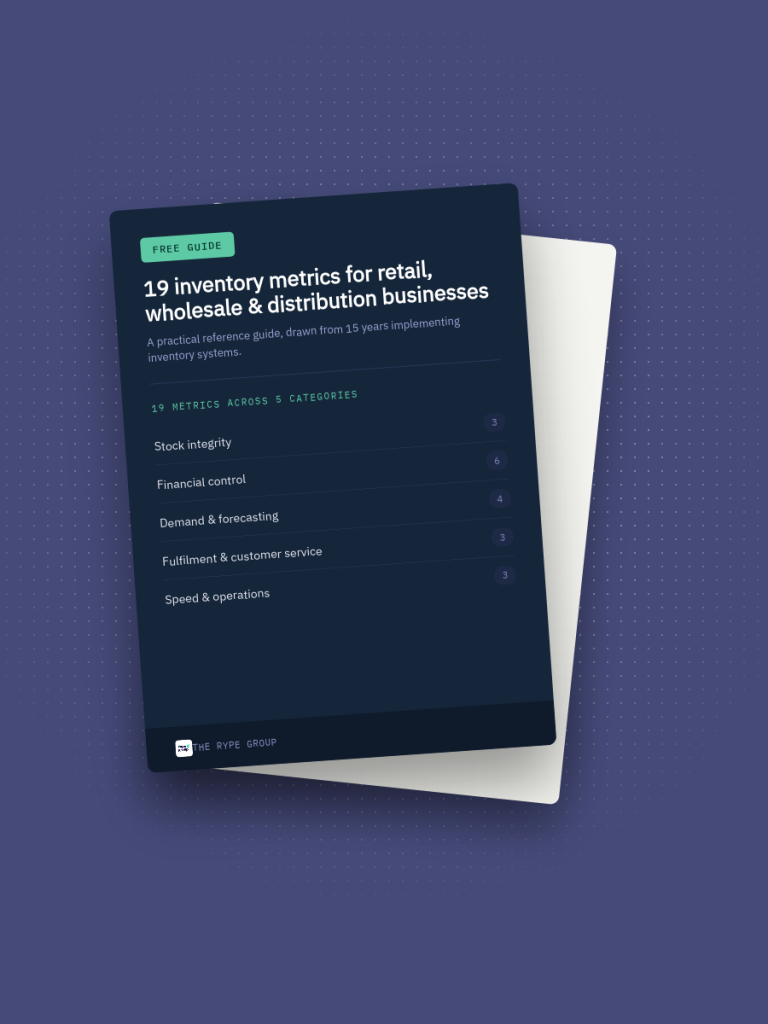
19 Inventory Metrics for Retail, Wholesale & Distribution Businesses
Our 19 Inventory Metrics Guide explains the key measures that help wholesale, distribution and light manufacturing businesses improve purchasing, inventory visibility, stock integrity and operational performance.
Understanding these metrics gives you a practical framework for making more informed purchasing decisions and identifying issues before they become costly.